10 hr
Jebel Shams Grand Canyon Adventure
- Expert local guide
- Small group
- Skip-the-line access
- Free cancellation
Muscat Jebel Shams Tour — Summit Hikes & Canyon Access
Oman's highest peak, three thousand metres of stone and light
Compare fares, pick the fit — all bookings are mobile-voucher and eligible for free cancellation where shown.
10 hr
10 hr
8 hr
| Experience | Duration | Pickup | Skip-the-line | Guide | Small group | Free cancel. | Price | |
|---|---|---|---|---|---|---|---|---|
|
Guided Experience
Most popular
Jebel Shams Grand Canyon Adventure
|
10 hr | ✓ | ✓ | ✓ | ✓ | ✓ | €62 | Book → |
|
Guided Experience
Nizwa Market & Jebel Shams Canyon Adventure
|
10 hr | ✓ | ✓ | ✓ | ✓ | ✓ | €121 | Book → |
|
Guided Experience
Jebel Shams Canyon & Nizwa Fort Full-Day Adventure
|
8 hr | ✓ | ✓ | ✓ | ✓ | ✓ | €166 | Book → |
Worth it for adventure seekers and nature enthusiasts
A muscat jebel shams tour delivers exceptional value for those seeking Oman's most dramatic landscape without the entrance fee barrier—the mountain itself is free to access. Full-day adventures typically combine the Grand Canyon of Arabia's rim walk with cultural stops in Nizwa or Al Hamra, providing layered immersion beyond the single-trail experience independent travelers often settle for. The guided format handles the challenging mountain roads and adds context to abandoned villages clinging to canyon walls. Summit hikes reveal terraced farms and 3,000-meter panoramas across the Al Hajar range. If you prefer solitary exploration and have a 4WD vehicle, the self-drive option remains valid, but organized tours streamline logistics and pair the canyon with heritage sites that reward first-time visitors to the region.
Bottom line: If you want Oman's highest peak and deepest canyon without the logistics burden, muscat jebel shams tour options justify the investment.
Jebel Shams offers a rugged, high-altitude wilderness experience, whereas Jebel Akhdar provides a more fertile, agricultural escape; they complement each other, though many travelers view the former as the more dramatic mountain landmark. Selecting the right muscat jebel shams tour depends on whether you prefer geological formations or terraced gardens.
|
Top pick Jebel Shams |
Jebel Akhdar | |
|---|---|---|
| Primary Appeal | Deep canyon vistas | Terraced fruit orchards |
| Terrain Profile | Rugged rocky plateaus | Cultivated limestone slopes |
| Main Sights | Wadi Ghul rim | Rose and pomegranate farms |
| Required Transport | 4WD vehicle essential | 4WD vehicle mandatory |
| Activity Level | High intensity hiking | Moderate walking paths |
| Muscat Jebel Shams Tour Tickets | Availability varies by date | Requires separate booking |
| See tickets & prices |
Verdict: Choose Jebel Shams for raw, wide-angle canyon perspectives or select Jebel Akhdar for a lush cultural excursion through regional flora, making these muscat jebel shams tour tours and similar mountain outings distinct entries for your Oman travel itinerary.
Hand-picked experiences loved by thousands of travelers
9 hours
Free Cancellation
Journey through Oman's historic forts, ancient villages, and the dramatic Grand Canyon of Arabia
15 hours
Free Cancellation
Scale Oman's tallest mountain and witness jaw-dropping canyon vistas on a full-day private adventure.
9 - 10 hours
Free Cancellation
Journey from Muscat to Oman's cultural heartland, exploring mountain villages, heritage sites, and terraced gardens.
9.5 hours
Free Cancellation
Traverse Oman's Green Mountain by Land Cruiser, explore historic Nizwa, and discover ancient falaj systems
8–10 hours
Free Cancellation
Flexible full-day expedition through fortresses, souqs, and museums with five route options
8 hours
Free Cancellation
Journey through Oman's historic capital and ascend into the breathtaking Hajar Mountains on this full-day adventure
2 days
Free Cancellation
Journey through Oman's dramatic highlands, ancient villages, and the rim of Arabia's deepest canyon
2 days
Free Cancellation
Discover Oman's highest peak, hike the Grand Canyon, and stay overnight in a mountain resort with meals
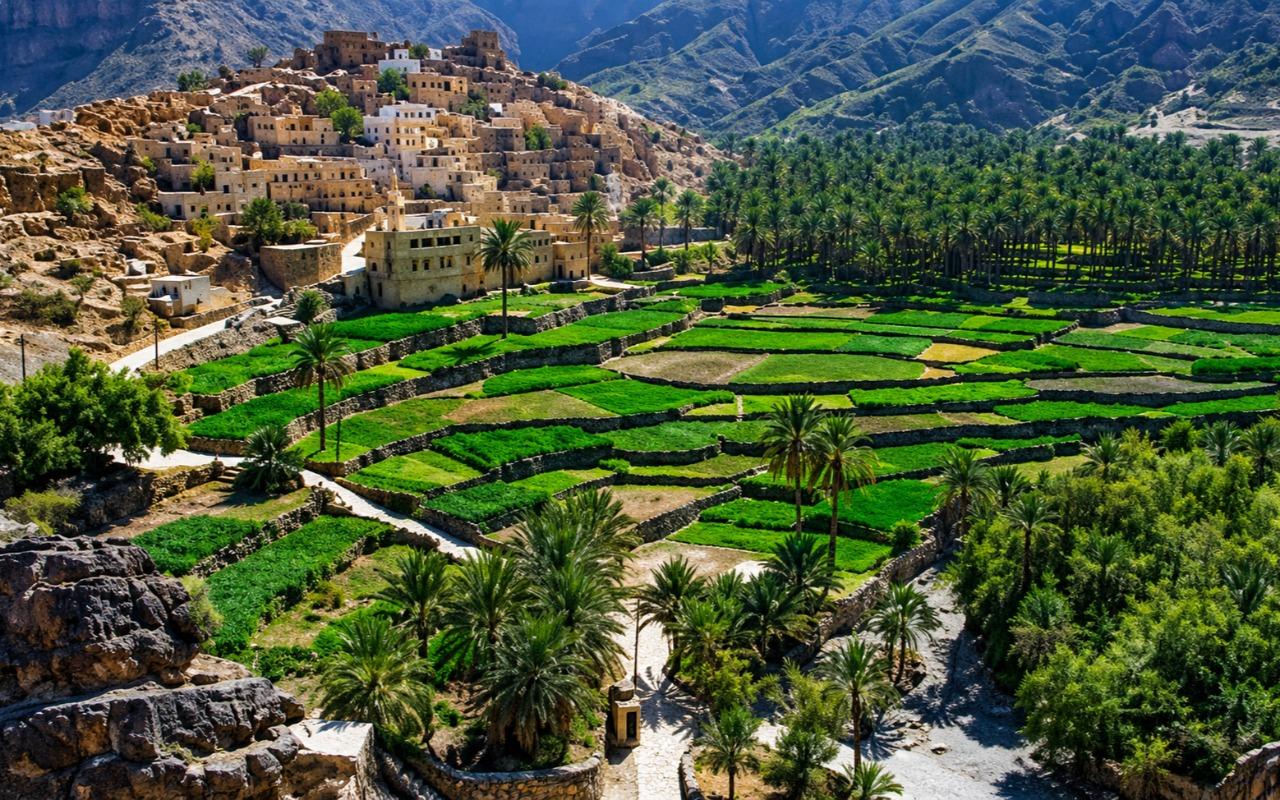
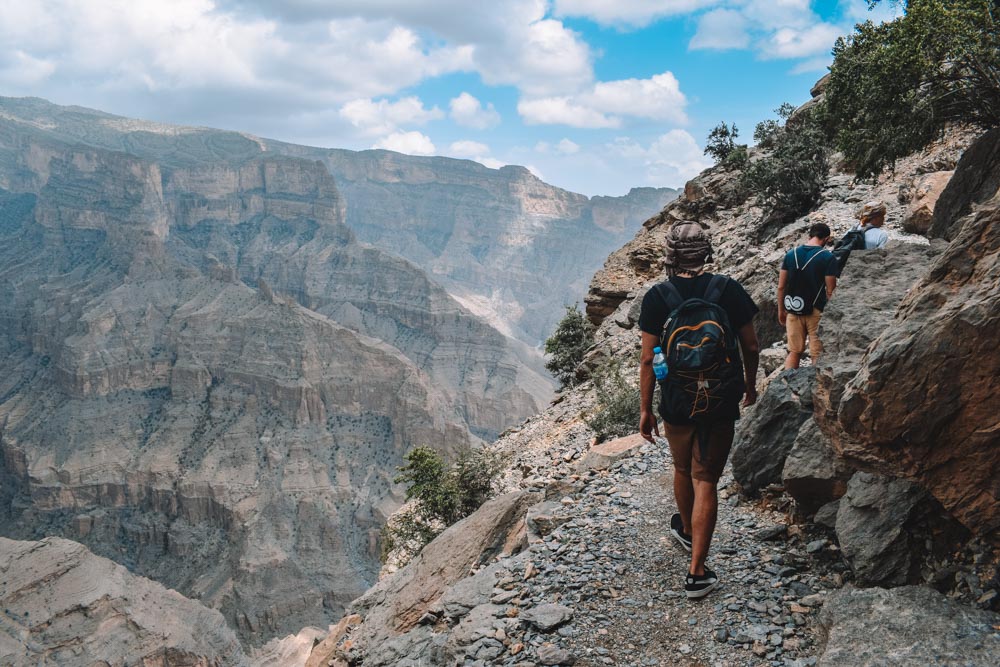
A historic cliffside path tracing the rim of the canyon, passing abandoned stone dwellings.
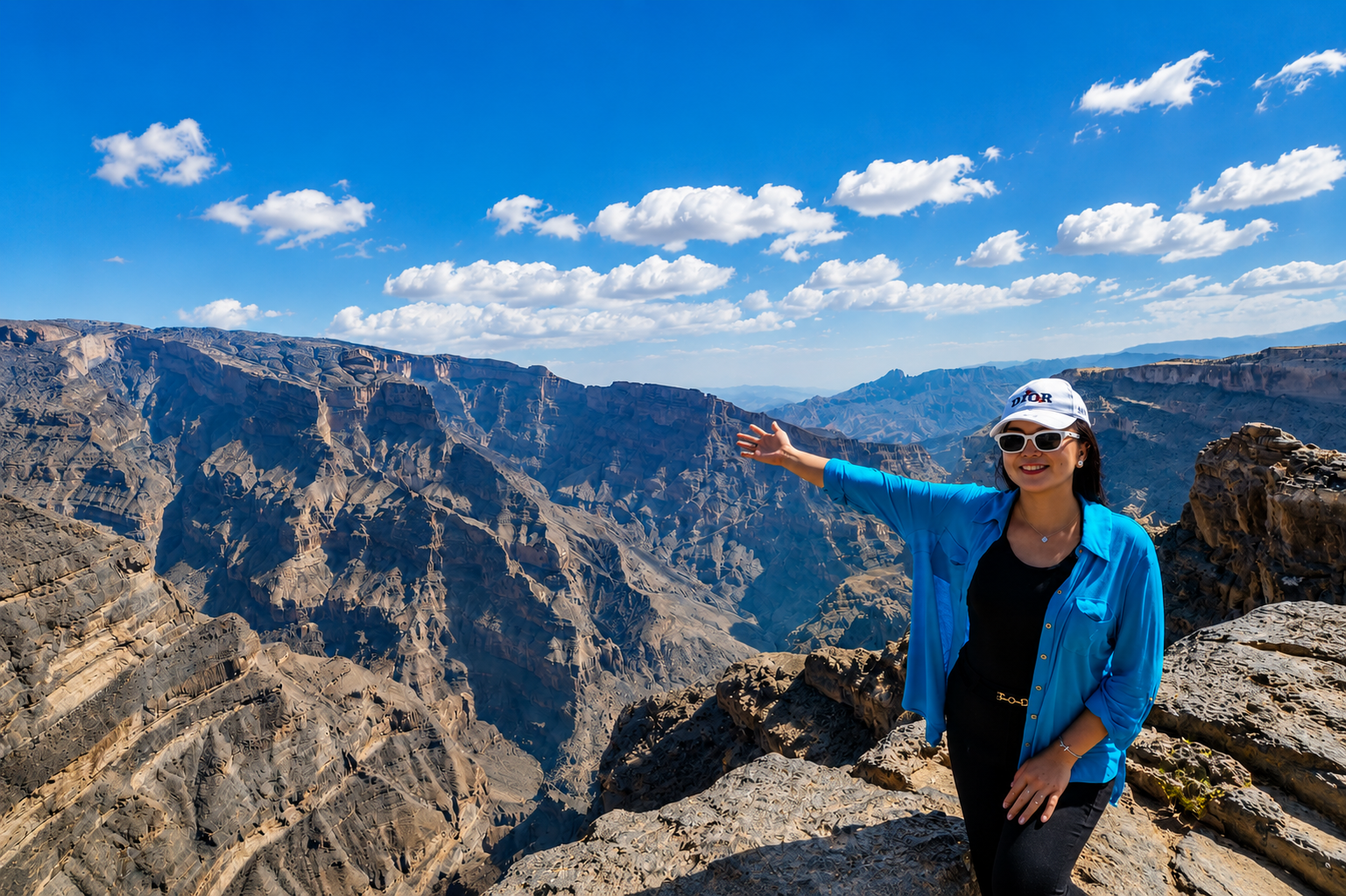
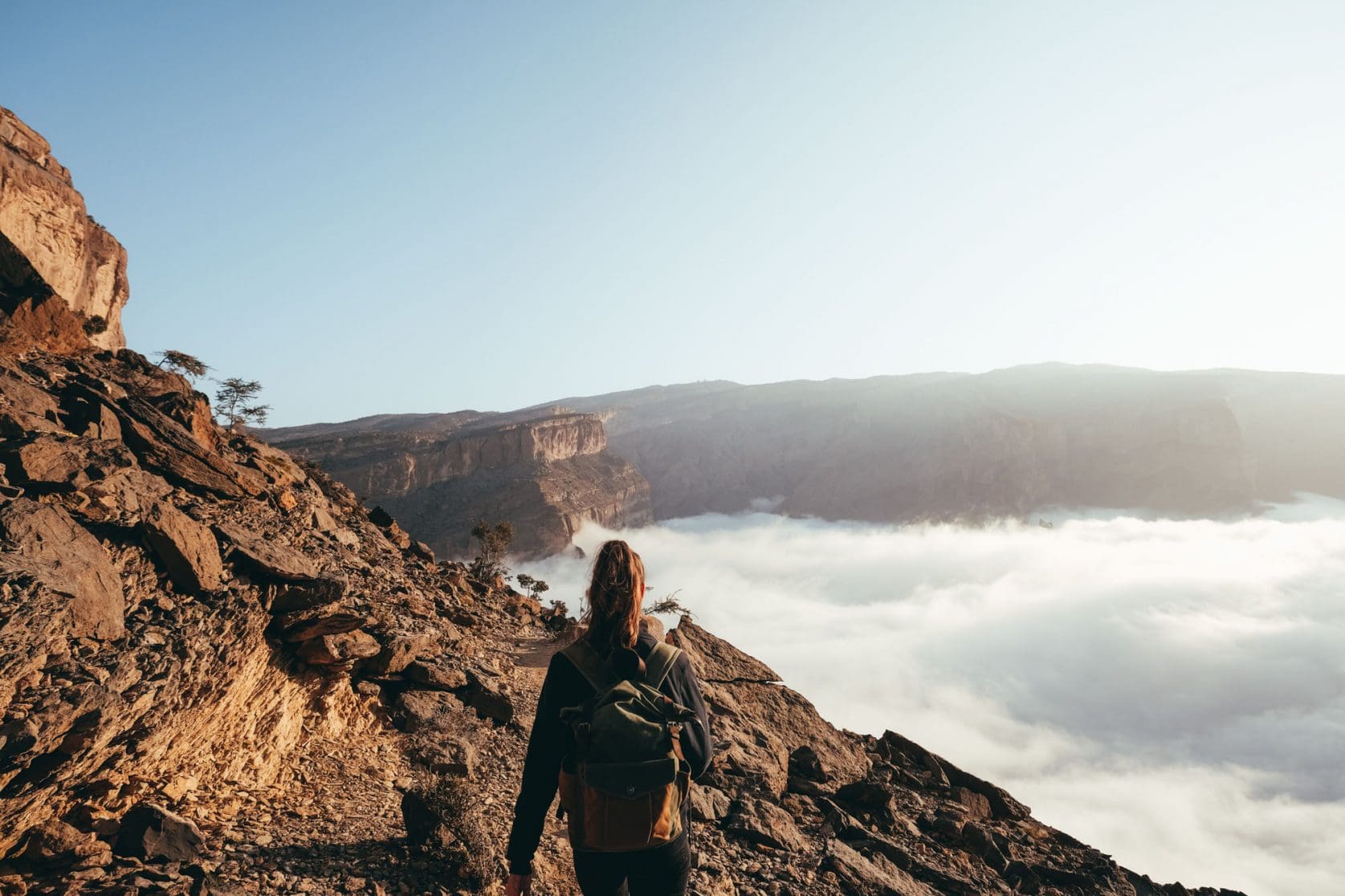
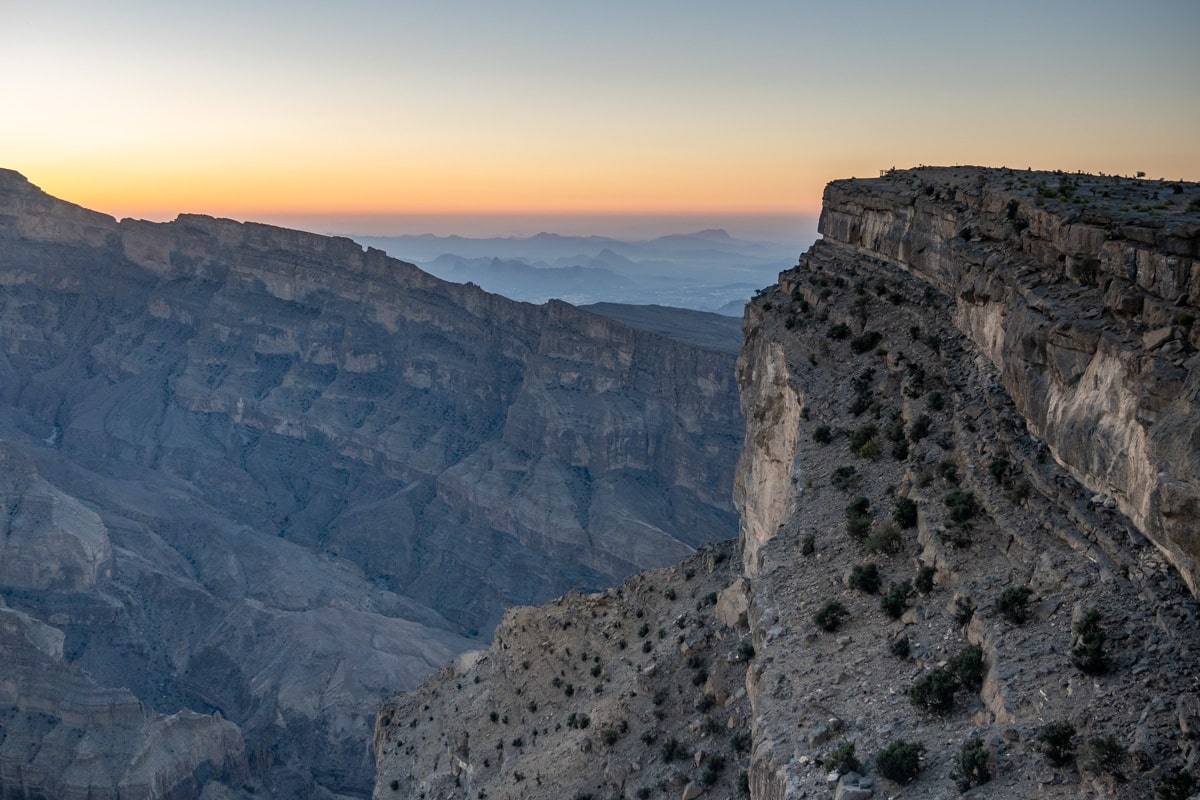
Offers views of the Grand Canyon of Arabia, with vertical drops exceeding 1,000 meters.
The highest point in Oman, reaching an elevation of 3,009 meters.
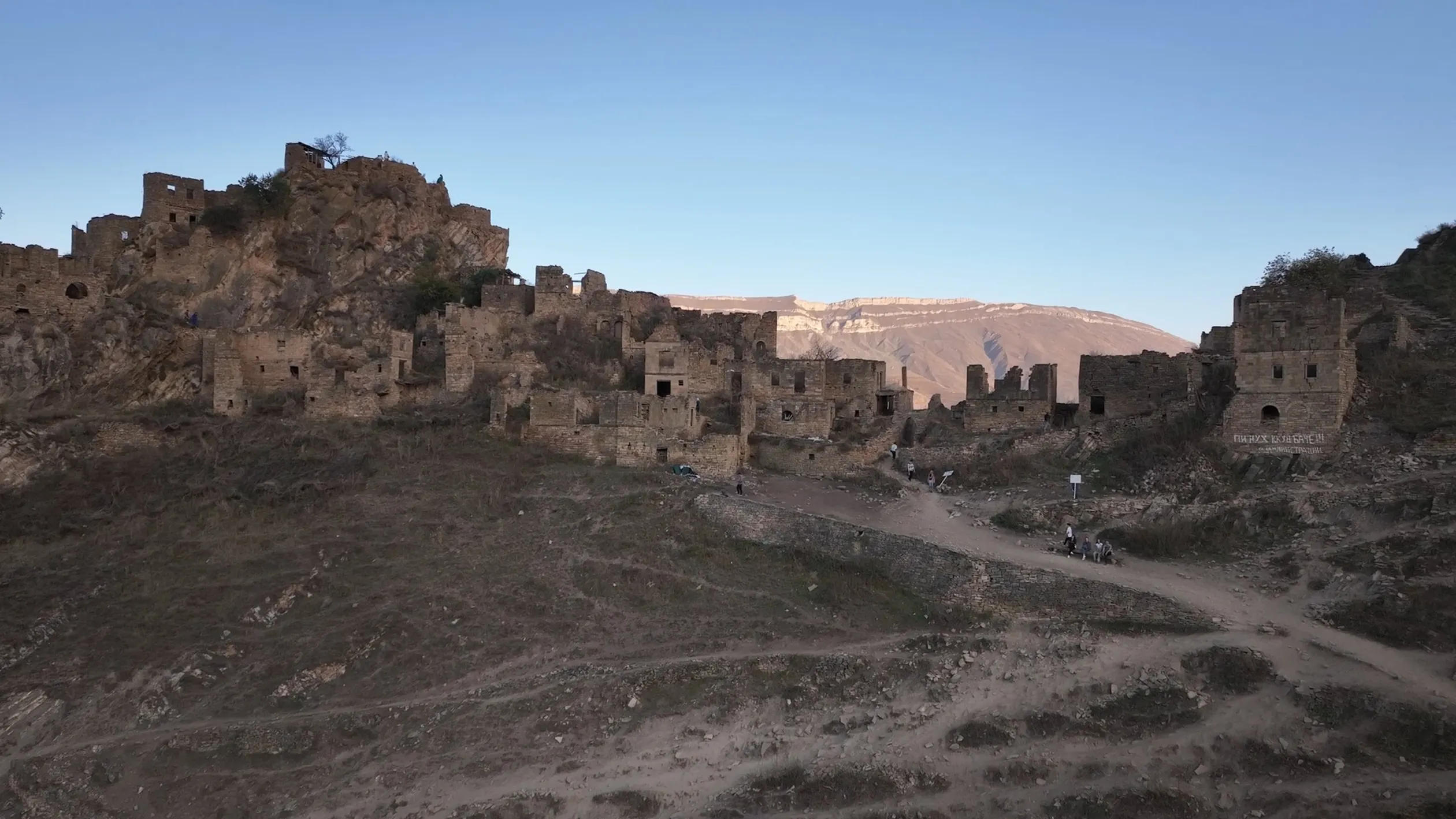
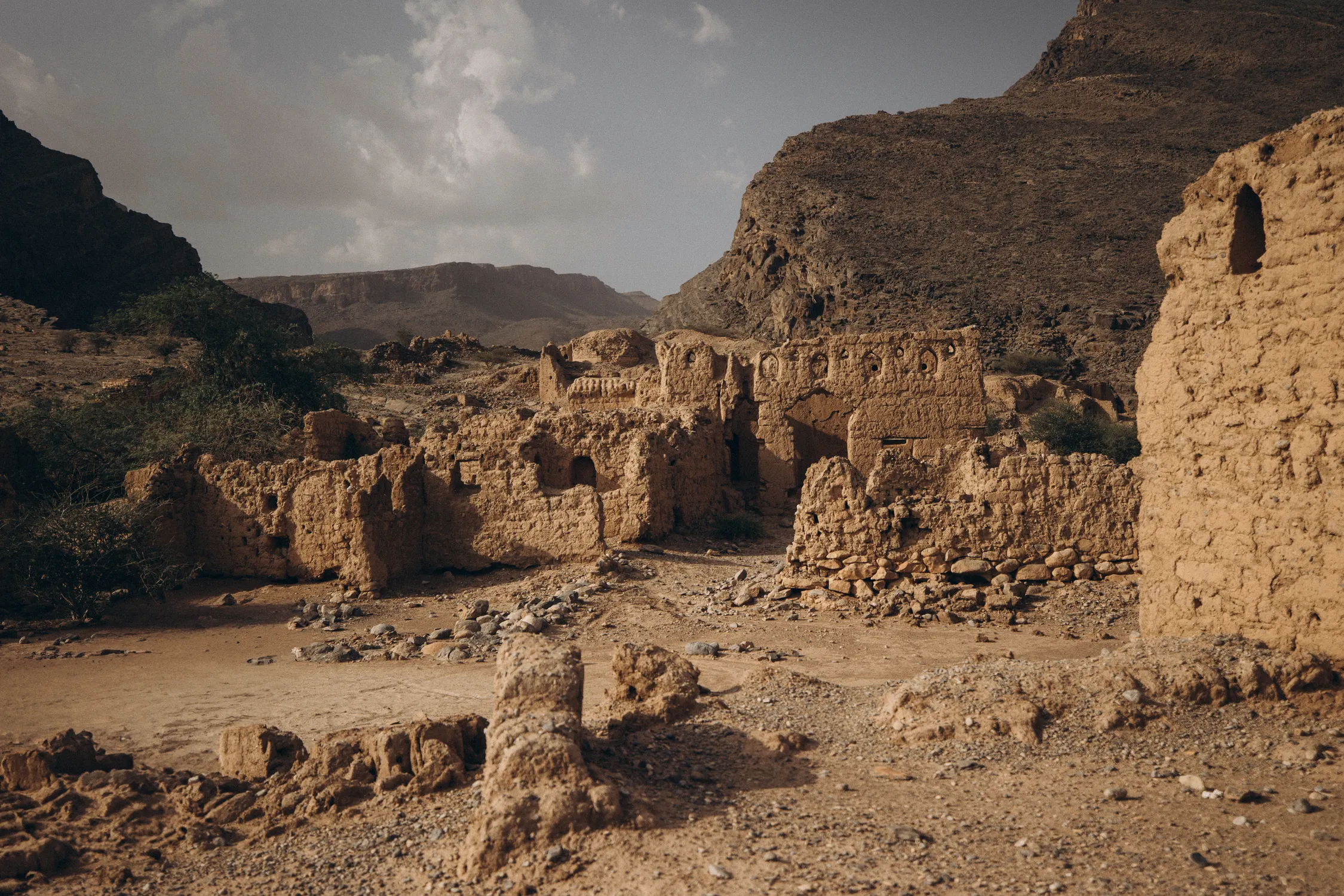
Remnants of ancient, dry-stone mudbrick settlements built into the cliff ledges.
The remote, high-altitude setting provides exceptionally dark skies for night photography.
You leave Muscat before first light, the highway empty as you cross the Batinah Plain toward the interior. Two hours later the road climbs into the foothills, date palms giving way to acacia and juniper as the air cools.
At Nizwa your guide turns west onto the gravel track that spirals up the massif, each switchback revealing another layer of canyon wall below. You reach the rim by mid-morning, the sun already high but the breeze sharp at three thousand metres.
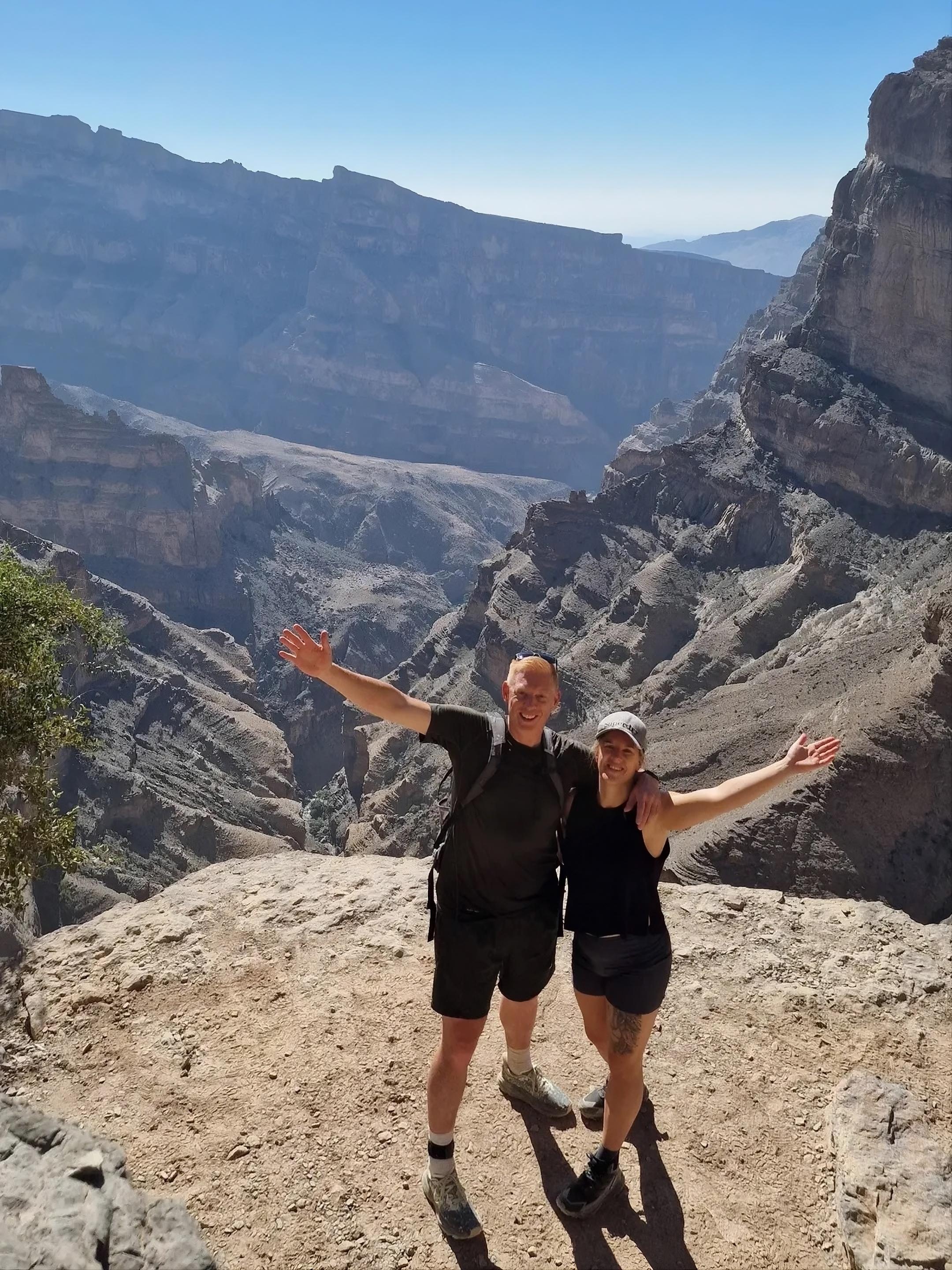
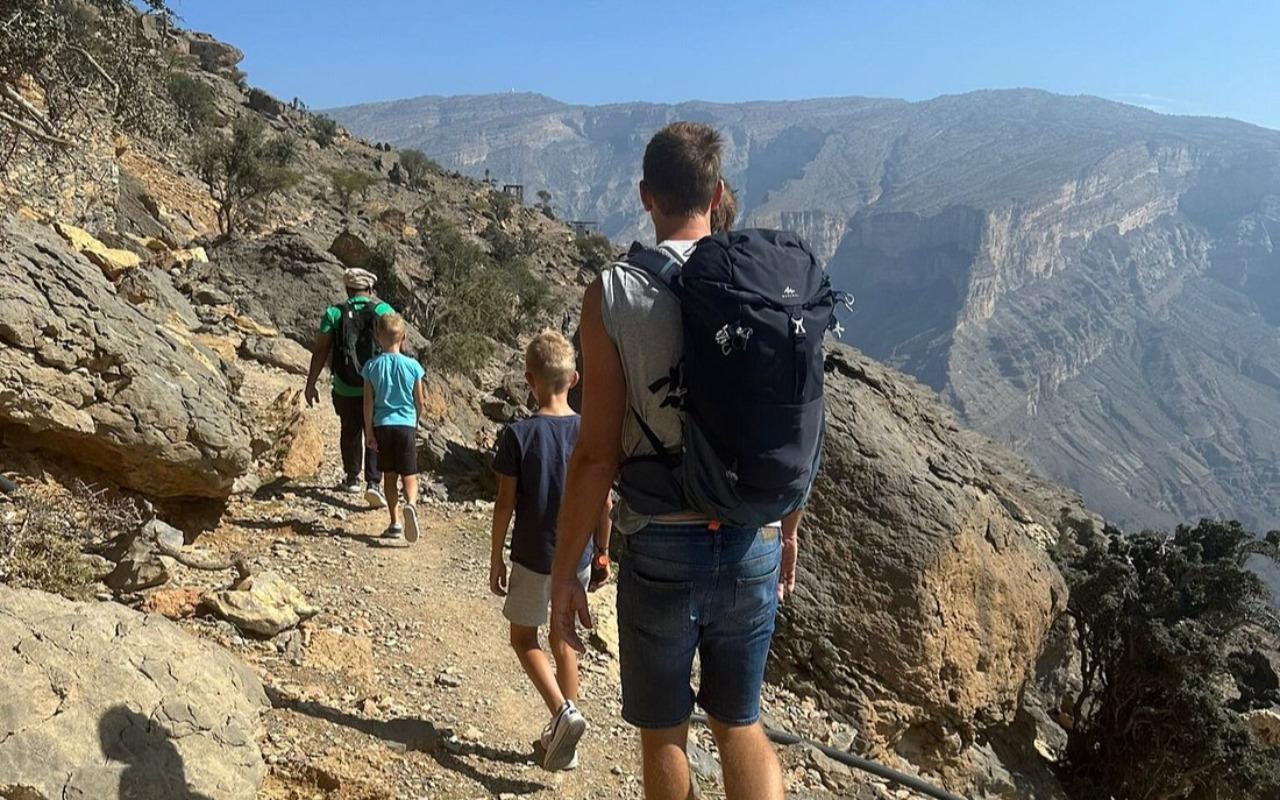
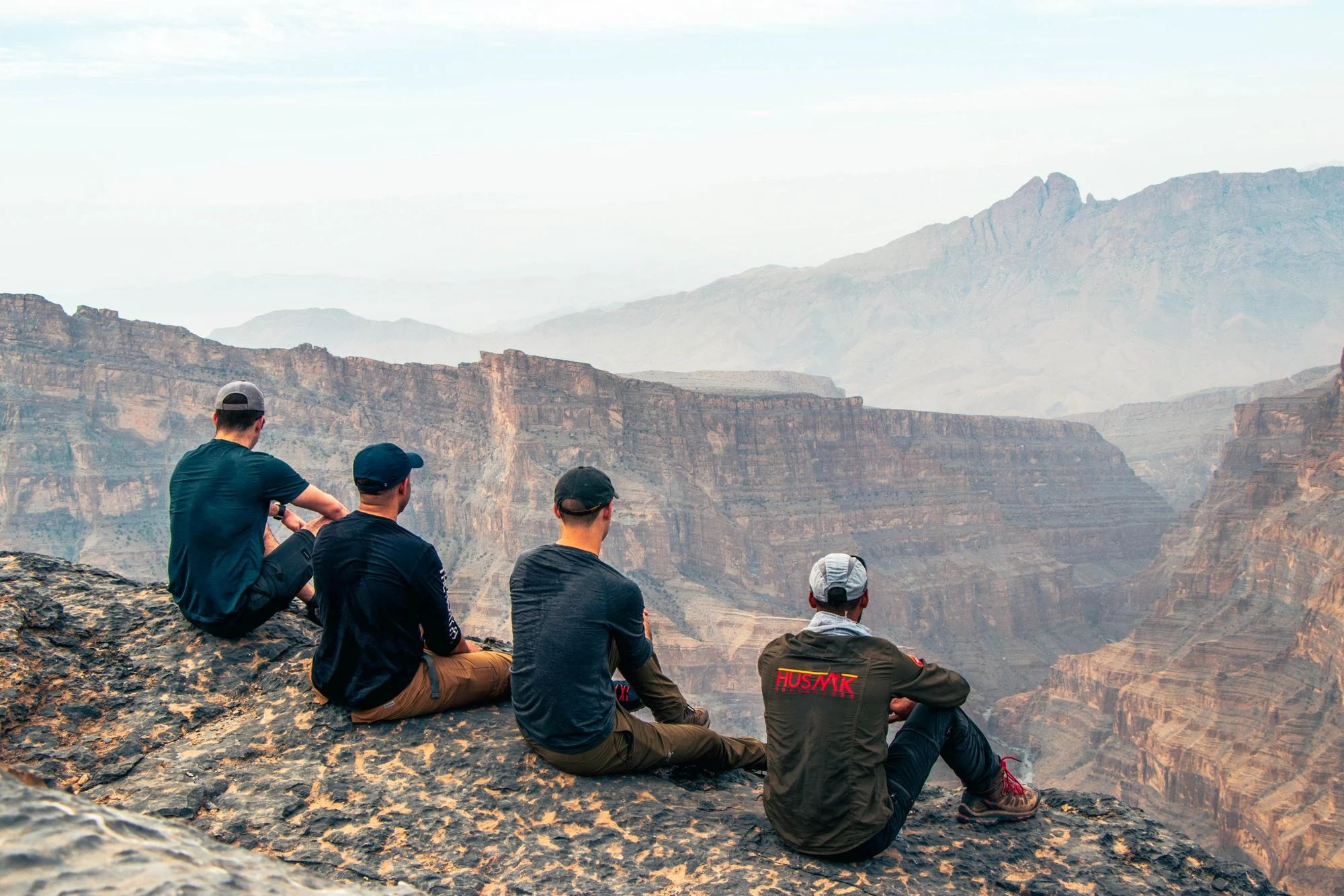
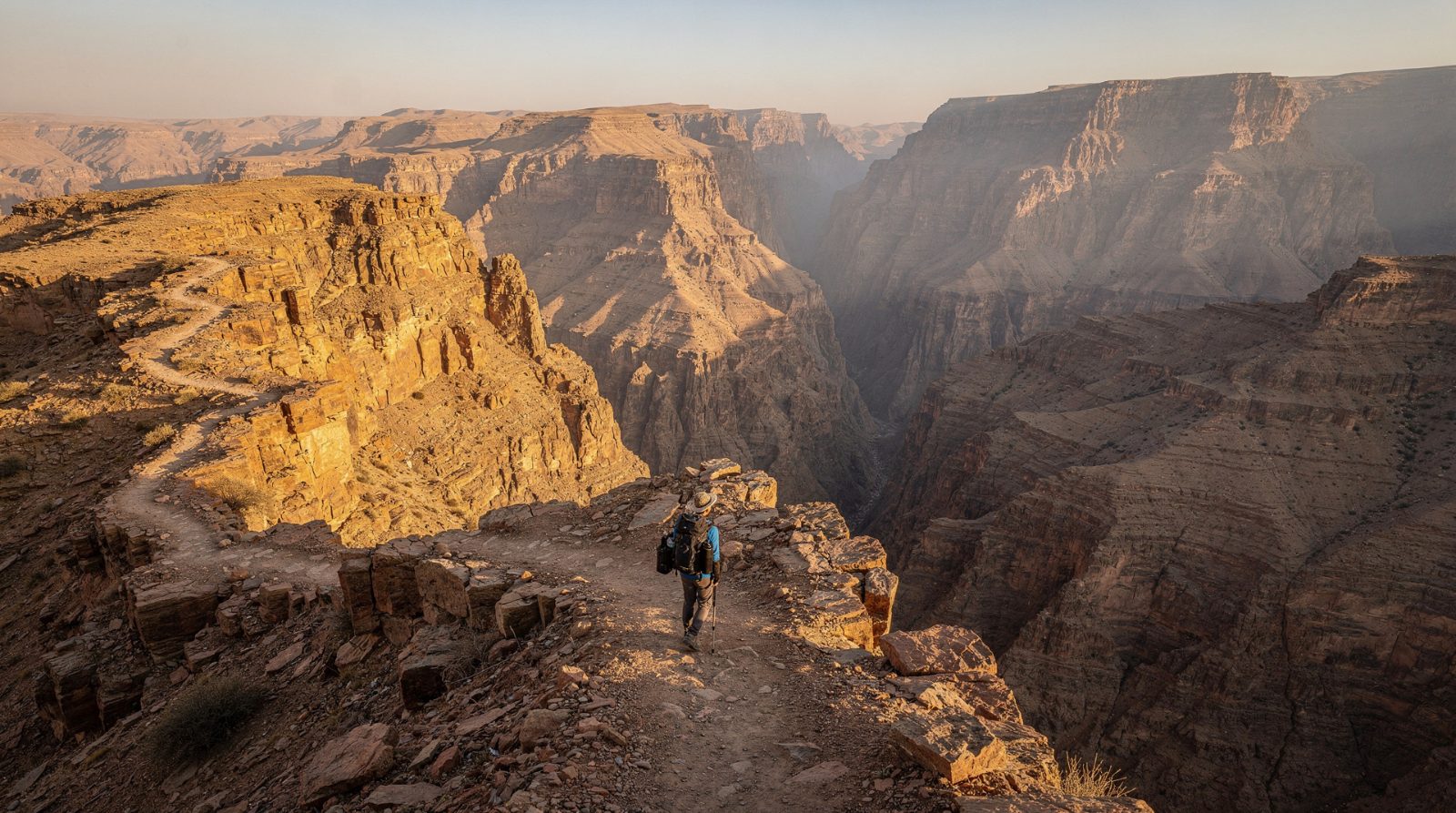
The Balcony Walk begins at a stone marker, the path threading between dwarf juniper and limestone boulders smoothed by wind. You follow the canyon edge, the drop to your left absolute, the opposite wall a kilometre away across the void. Abandoned villages cling to ledges below, their terraces still outlined in dry-stacked stone. The trail narrows where rockfall has claimed the outer edge, and you step carefully, the scree loose underfoot. At the midpoint a natural platform juts over the wadi floor, and you stop to watch a pair of eagles circle the updraft, their wings motionless against the thermal.
You return to the trailhead before noon, the heat building, and drive five minutes to the summit viewpoint where the plateau drops away in every direction, the Interior Range rippling north toward the Empty Quarter.
All the details about your upcoming adventure in one place
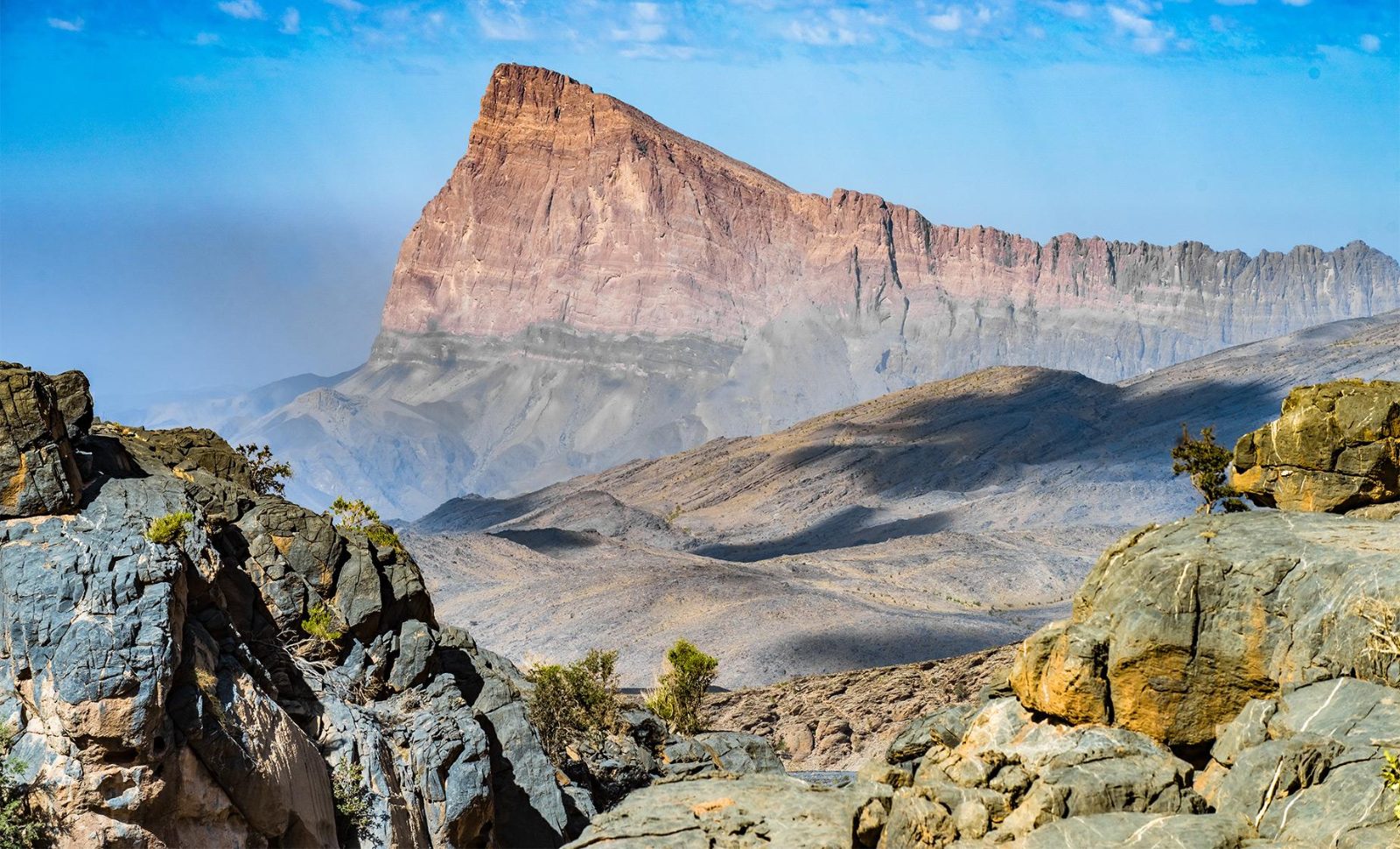
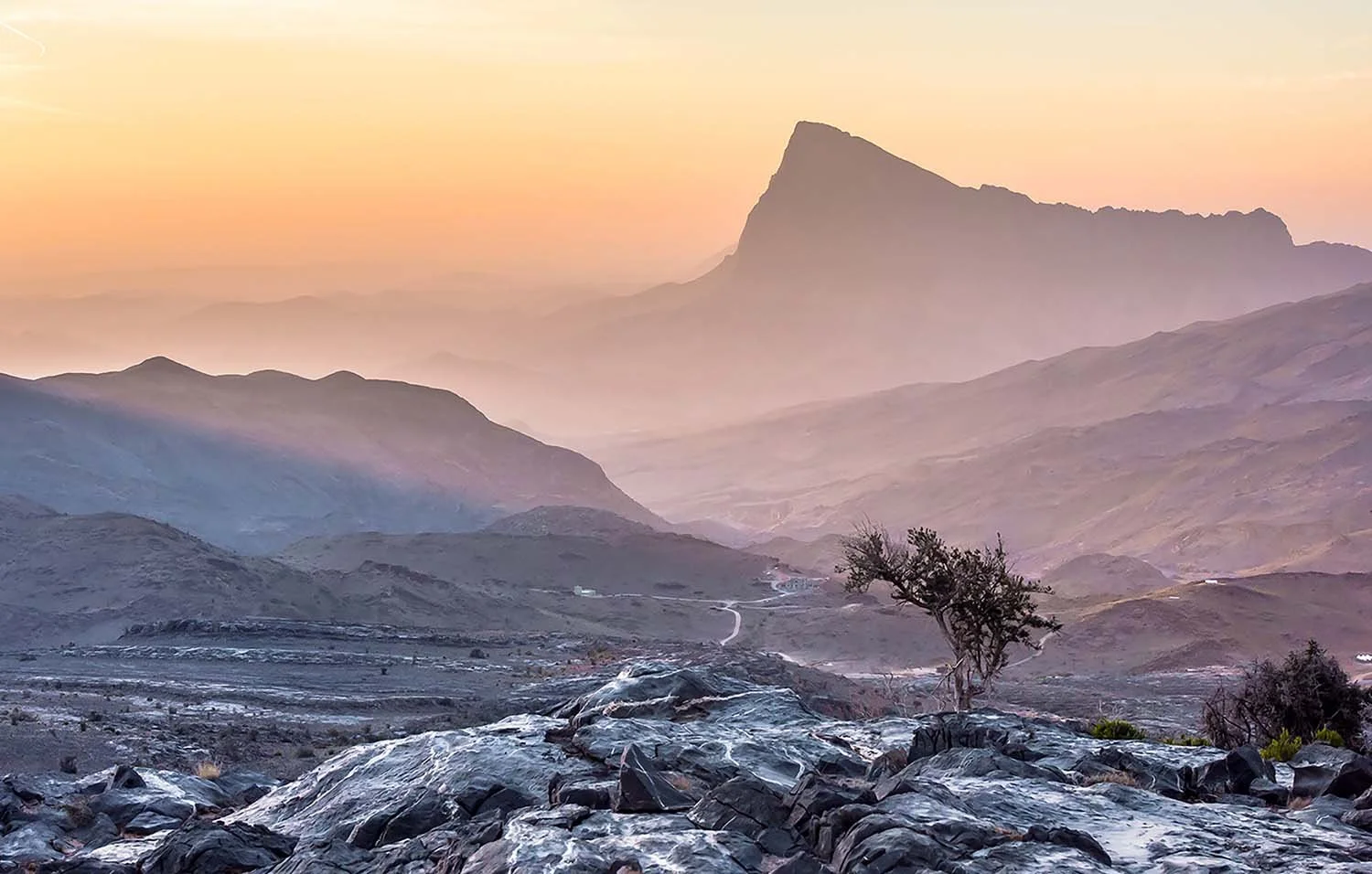
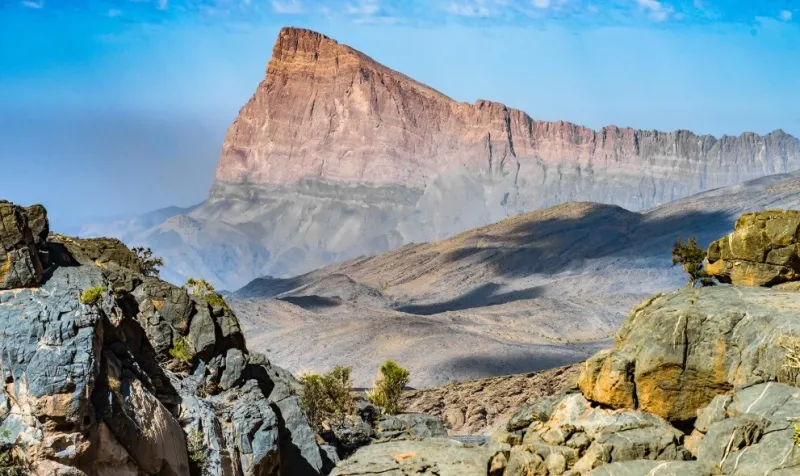
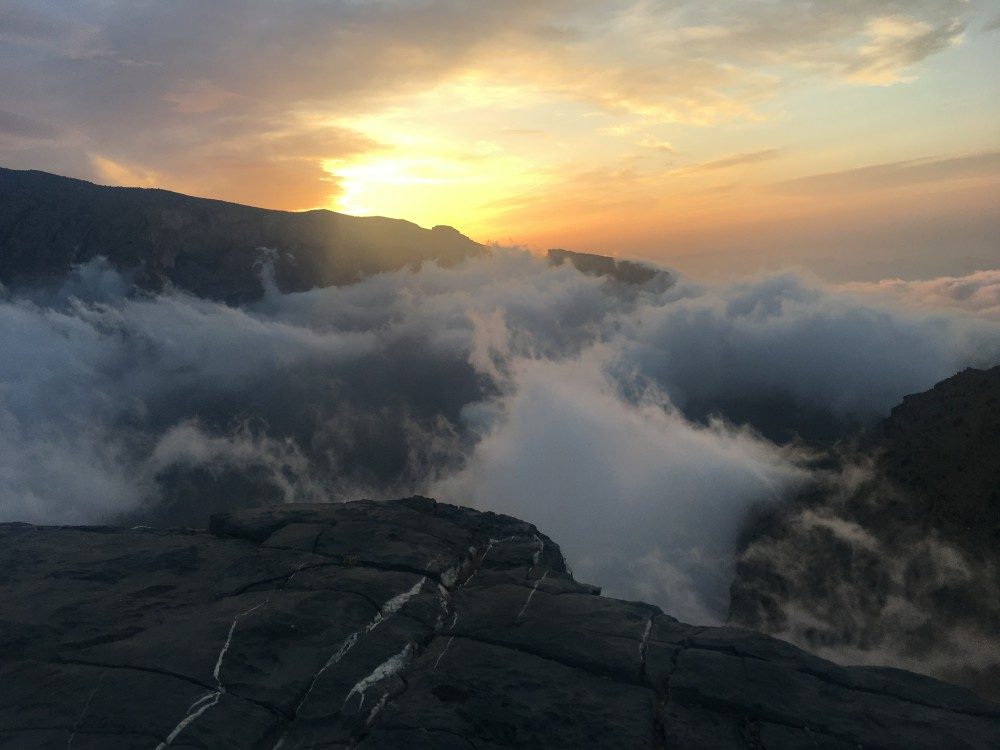
Jebel Shams rises three thousand nine metres above sea level, the tallest summit in the Al Hajar range and the highest point in Oman. Its Arabic name translates to Mountain of the Sun, earned not through myth but through the plain fact that dawn strikes its limestone face before any other peak in the country.
The mountain anchors the western spine of the range, a geological uplift that began sixty million years ago when the Arabian Plate collided with Eurasia, thrusting Cretaceous seabed skyward into ridges that now wall off the interior from the coast.
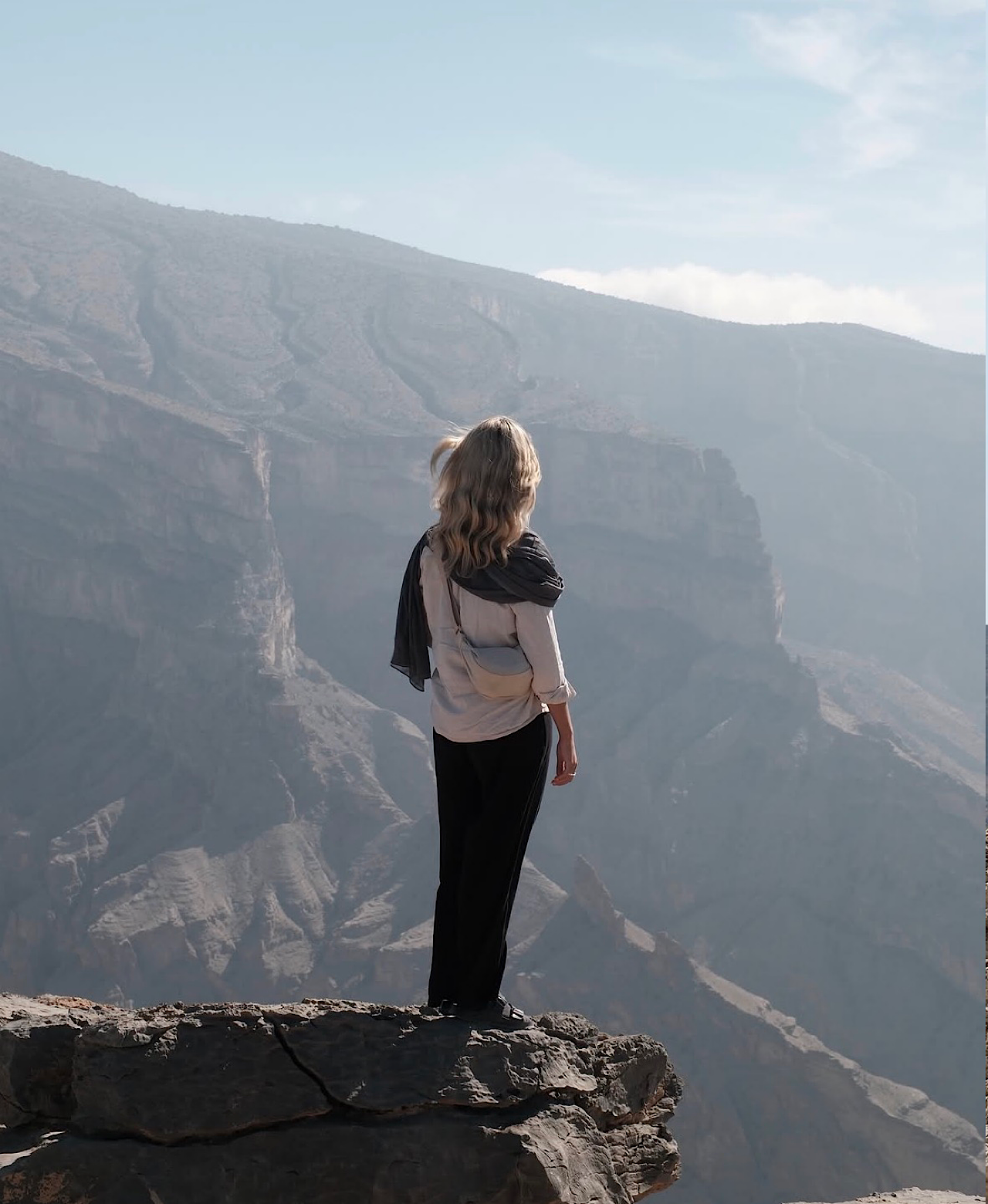
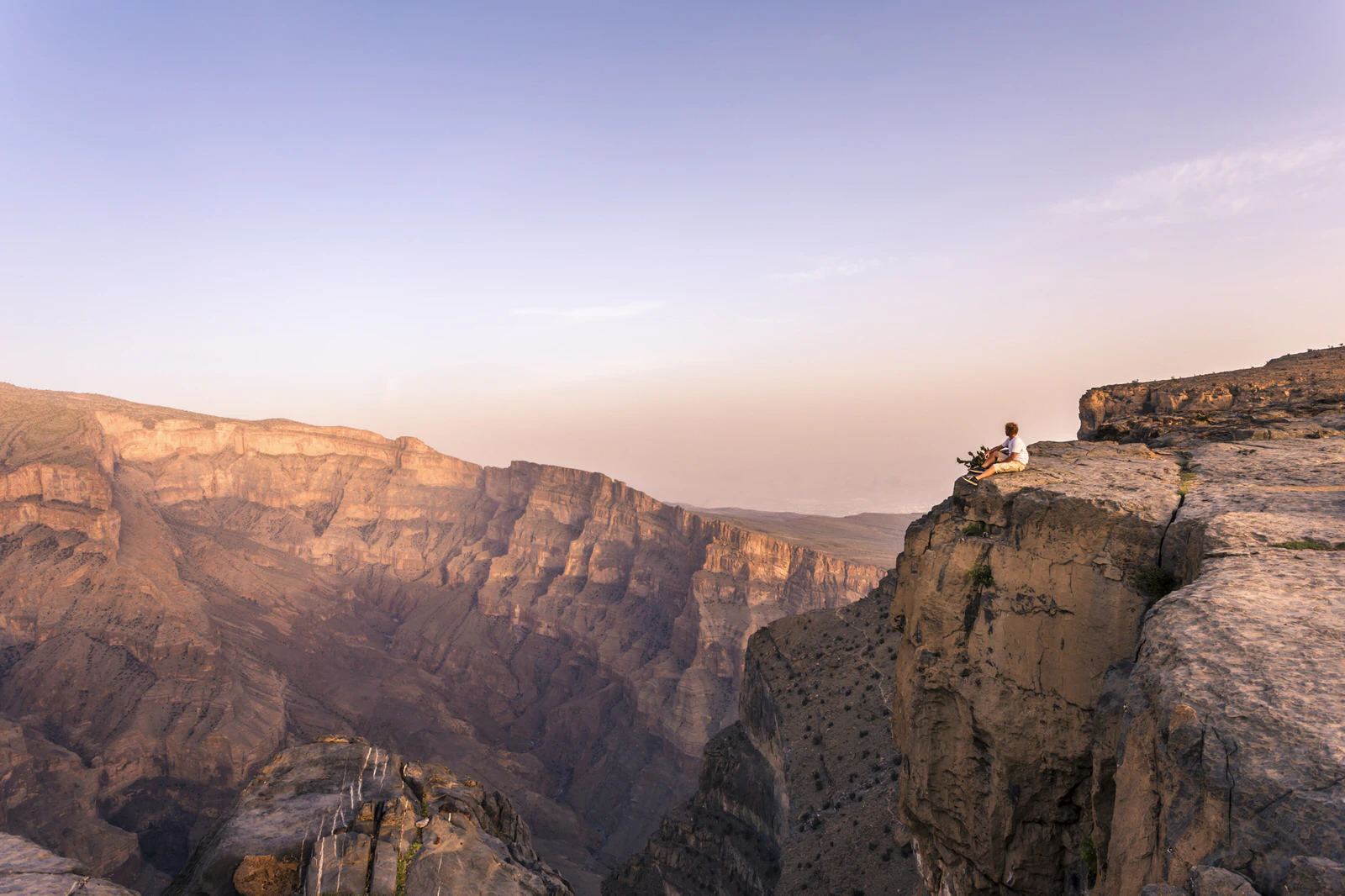
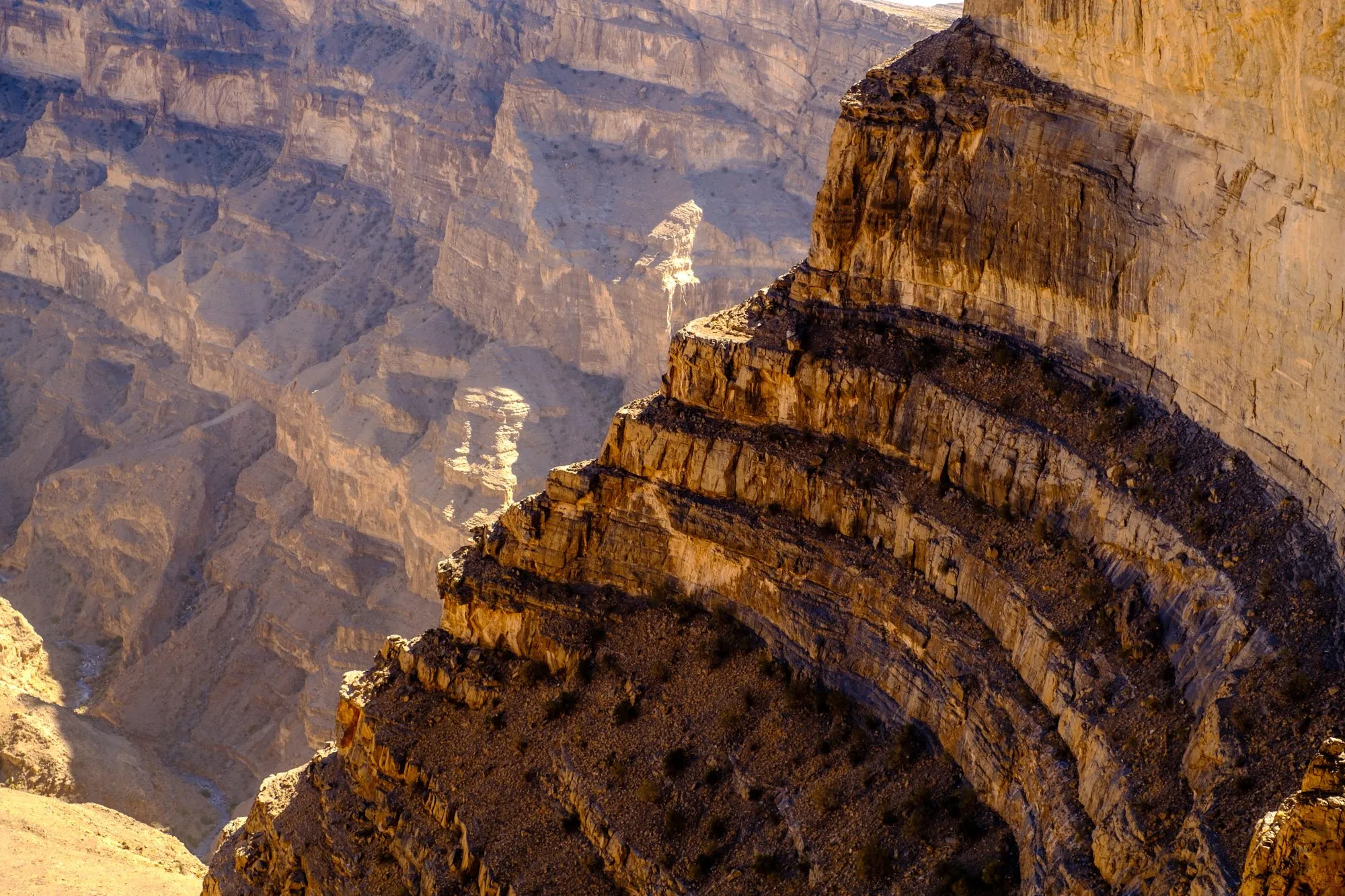
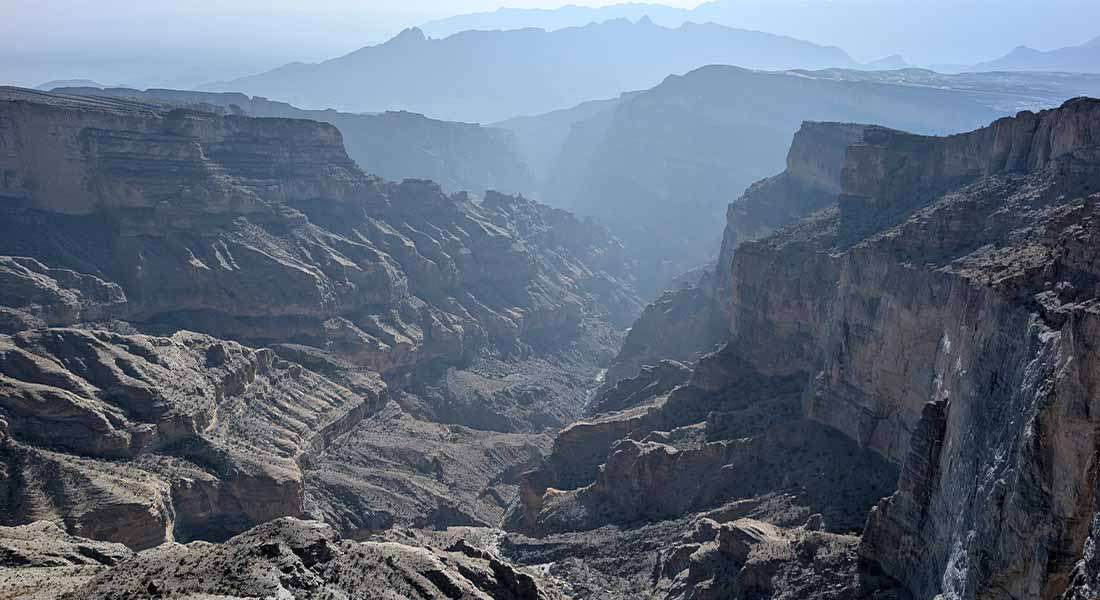
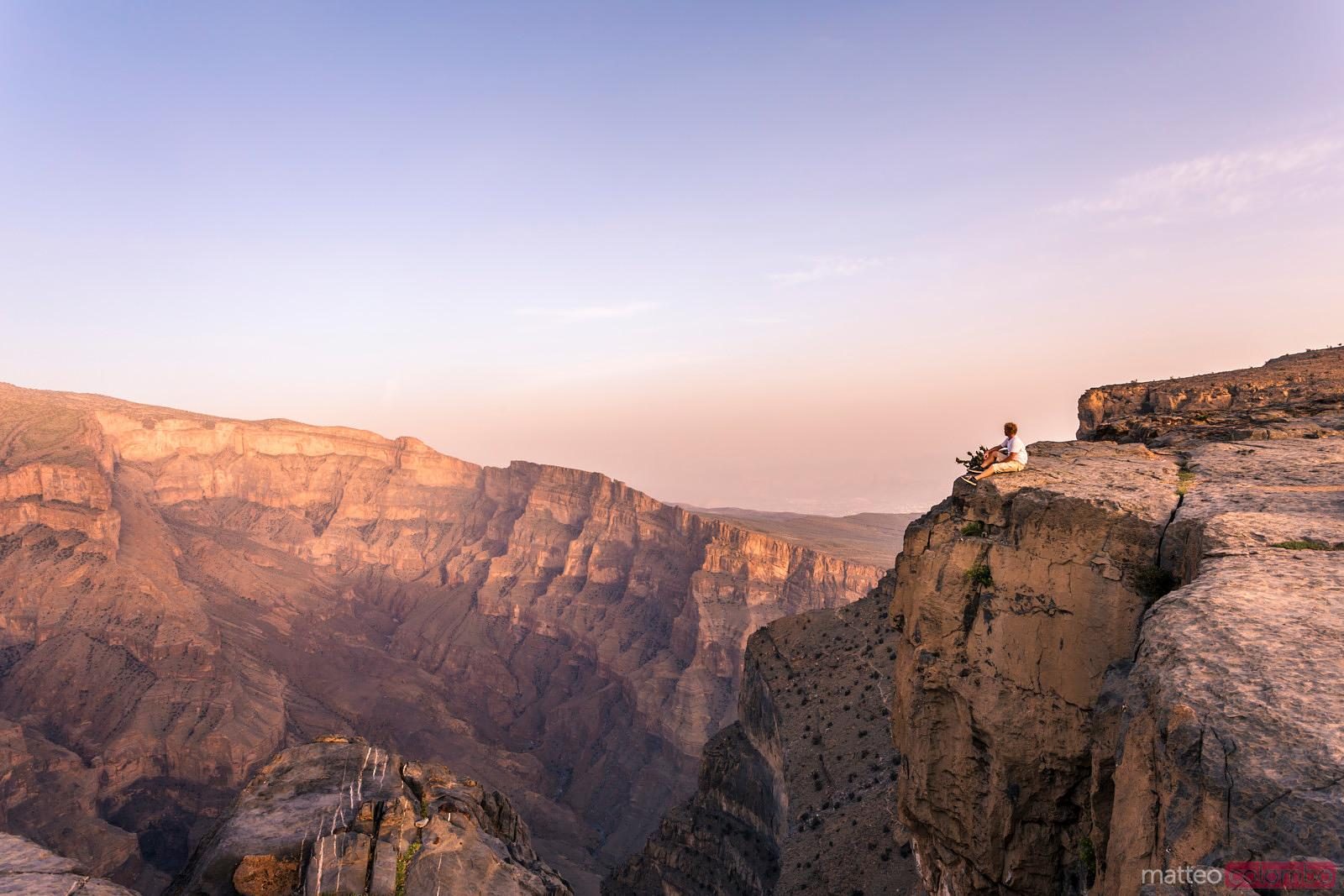
What draws travellers today is Wadi Ghul, the canyon that cuts a thousand-metre gash into the plateau below the summit. Locals call it the Grand Canyon of Arabia, and while the comparison overstates scale, the geology is no less arresting: layered limestone and ophiolite, the latter a rare exposure of oceanic crust thrust onto land during the same tectonic event that built the range. The wadi's north rim carries a graded trail, the Balcony Walk, that contours along the cliff edge for two and a half kilometres, passing abandoned stone villages whose terraced fields cling to slopes too steep for modern agriculture. The route demands no technical skill, but the drop is sheer and the path narrows in places to less than a metre, with scree underfoot and no barriers.
Most Muscat Jebel Shams tours depart the capital before dawn, covering the two hundred and forty kilometres to the mountain in under three hours via the interior highway through Nizwa. The final ascent from the plateau switchbacks through twenty kilometres of graded gravel, gaining fifteen hundred metres in elevation and passing Bedouin settlements that still rely on falaj irrigation channels engineered a millennium ago. The summit area holds no facilities beyond a single campground and a military radar station; the trails, viewpoints, and canyon rim remain free to access year-round, governed by no gate or operating schedule. Winter brings freezing nights and occasional snow above twenty-five hundred metres, while summer sees midday ground temperatures exceed forty degrees Celsius, rendering the canyon floor impassable until late afternoon.
Dawn strikes its limestone face before any other peak in the country.
Modest clothing covering shoulders and knees is recommended out of respect for local mountain communities. Sturdy hiking shoes with good grip are essential for any muscat jebel shams tour involving the Balcony Walk.
Carry a light daypack for your muscat jebel shams tour with essential water and sun protection. There are no lockers or secure storage facilities on the plateau.
Photography is permitted throughout the area, but always ask permission before taking photos of local villagers. A muscat jebel shams tour offers dramatic cliffside vistas ideal for wide-angle landscape shots.
The area is nature-focused and lacks kid-friendly amenities or railings at many cliff edges. Families on a muscat jebel shams tour should supervise children closely at all times due to high drop-offs.
The natural trails and rocky terrain of a typical muscat jebel shams tour are not wheelchair accessible. Steep gradients and uneven paths make this site difficult for visitors with mobility impairments.
Bring sufficient water and snacks, as facilities on the plateau are limited. Many choosing a muscat jebel shams tour pack a picnic to enjoy at the canyon rim.
Opening hours
00:00–23:59
Address
Jebel Shams, Al Hajar Mountains, Oman
Accessibility
Challenging mountain terrain; not suitable for those with limited mobility
Best arrival
06:00–10:00
Navigation
4WD recommended for final mountain ascent
Most operators for a muscat jebel shams tour offer free cancellation up to 48 hours before the scheduled departure. Please review specific provider terms regarding the 0 OMR entrance fee for the mountain.
Recommended time
5-7 hours
A typical muscat jebel shams tour requires a full day due to the lengthy travel time from the capital to the Al Hajar Mountains. Plan for 3-4 hours of hiking if you attempt the balcony walk, plus additional time for viewpoint photography and transit between local landmarks. While morning hours remain the busiest for trail access, crowds thin significantly by early afternoon, offering more solitude along the canyon rim.
Crowd levels through the day
Jebel Shams, Oman's highest peak at 3,009 meters, has stood as a sentinel over the Al Hajar range for millions of years, yet its human story begins with the Bedouin tribes who named it "Mountain of the Sun" for the way dawn light strikes its eastern face. For centuries, these communities carved terraced farms into its lower slopes and used high-altitude trails to move livestock between seasonal pastures. The mountain remained largely isolated until the 1970s, when Sultan Qaboos bin Said's modernization program extended the first graded roads into the interior, connecting remote villages like Al Khitaym to the capital region. What had been a three-day mule journey became a half-day drive, and muscat jebel shams tour operators began venturing into the terrain by the late 1980s. The dramatic Wadi Ghul gorge, often called the "Grand Canyon of Arabia," drew the first wave of international trekkers in the 1990s. Local guides from the Hajar villages formalized the Balcony Walk, a cliffside trail that follows an abandoned irrigation channel along the canyon rim. By the early 2000s, the Ministry of Tourism paved sections of the access road and installed safety barriers at key viewpoints, though severe weather still closes the upper routes during winter. A small military outpost near the summit has restricted the final approach since the 1980s, capping public access at roughly 2,800 meters. Today, the mountain supports a mix of eco-lodges, campgrounds, and guide cooperatives, with most muscat jebel shams tour tours departing before dawn to reach the rim for sunrise. The villages below continue to farm terraced pomegranates and apricots, their stone houses and falaj channels a living record of adaptation to altitude. Conservation efforts intensified after 2010, when UNESCO recognized the aflaj irrigation systems of the Hajar as World Heritage. The Ministry now limits vehicle access on fragile ridgelines and has trained local rangers to monitor erosion along popular hiking routes. Despite the infrastructure, Jebel Shams retains its raw character: no ticket booths, no cable cars, only graded gravel and the stark geometry of limestone rising into thin air.
Bedouin tribes use Jebel Shams as a seasonal grazing route and carve terraced farms into its lower slopes.
Sultan Qaboos extends the first graded roads into the Al Hajar interior, opening the mountain to vehicle access.
International trekkers discover Wadi Ghul, and local guides formalize the Balcony Walk trail along the canyon rim.
The Ministry of Tourism paves sections of the access road and installs safety barriers at key viewpoints.
UNESCO recognizes the aflaj irrigation systems of the Hajar Mountains as World Heritage, raising conservation focus.
Eco-lodges and guide cooperatives expand, while rangers monitor erosion and restrict vehicle access on fragile ridgelines.
This high-altitude vantage offers a panoramic view of the canyon floor. Stand near the edge of the limestone cliffs to capture the vastness of the Wadi Ghul gorge.
Begin your trek here to photograph the dramatic vertical drop of the Grand Canyon of Arabia. Position your camera to include the rugged rock strata in the foreground.
Shoot the abandoned stone dwellings integrated directly into the cliffside. The contrast between the ancient masonry and the sheer abyss provides a unique composition for any muscat jebel shams tour.
Find a clear corridor along the rim to document the jagged peaks of the Al Hajar Mountains. This spot is popular for those seeking a muscat jebel shams tour tours perspective on the mountain's geological scale.
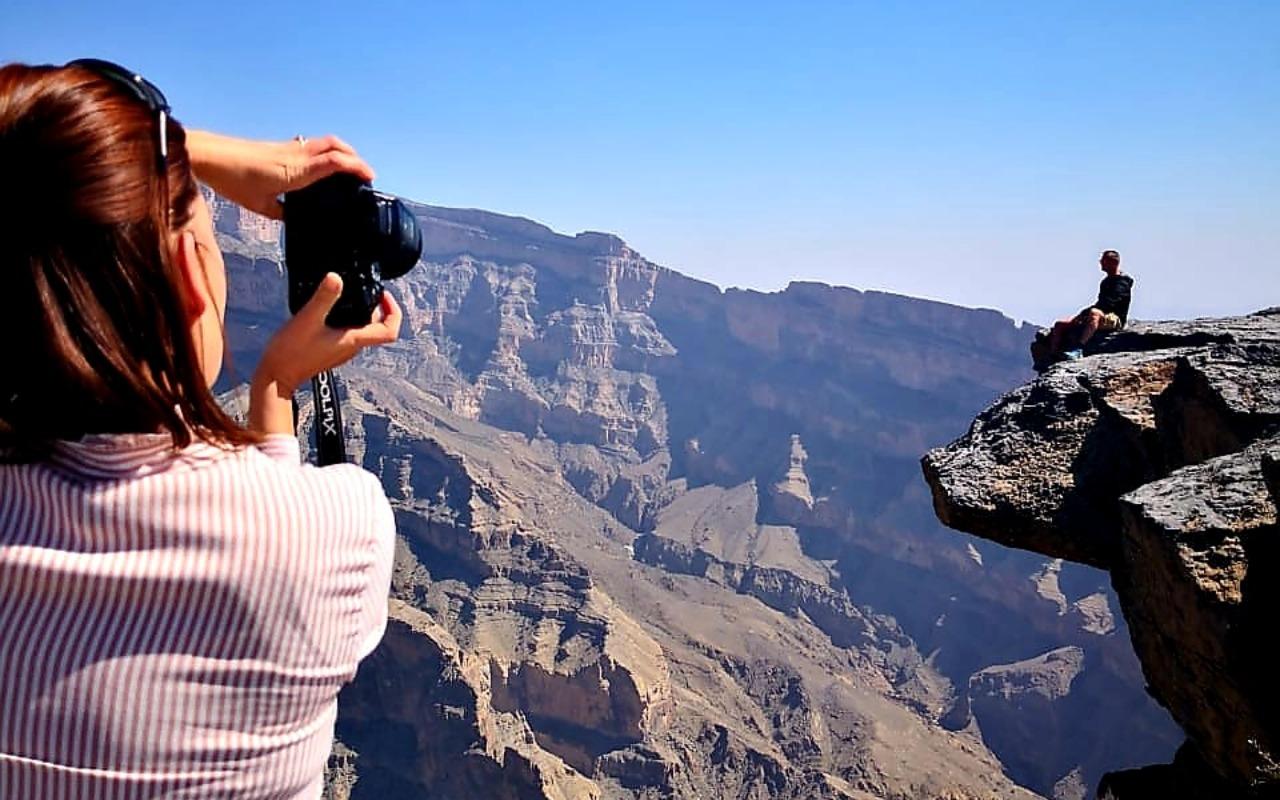
Capture the depth of the canyon from this elevated observation point. It is a favorite location for those needing high-quality muscat jebel shams tour tickets for guided photography excursions.
Exploring the majestic landscapes of Jebel Shams offers families a unique adventure, though the rugged terrain requires careful planning for those with younger children. A well-organized muscat jebel shams tour provides the safest and most convenient way to experience the high-altitude trails and canyon vistas.
The mountain trails are not stroller accessible due to the uneven, rocky terrain and cliffside paths, so bring a high-quality child carrier for younger ones.
The famous Balcony Walk is generally recommended for children aged 8 and older, as the path features steep drops without fencing.
Basic toilet facilities and small shops are available near the primary viewpoints, but visitors should arrive prepared with sufficient water and snacks as there are limited dedicated family services.
Plan for a full day of travel, as reaching this landmark from the city takes time, and the return hike is largely uphill.
There are no public family-friendly restaurants on the mountain, so guests should rely on hotel options or pack food to enjoy at designated sites during their muscat jebel shams tour tour.
To secure your spot, check availability for muscat jebel shams tour tickets and remember to follow the recommended 06:00–10:00 arrival window to avoid mid-day heat.
Dining options are concentrated within the mountain resorts near the rim, providing a convenient place to refuel during your muscat jebel shams tour. As these venues serve as primary hubs for the Al Hajar Mountains, advance planning is recommended for those joining organized muscat jebel shams tour tours.
Offers buffet-style dining featuring traditional Omani dishes and international cuisine. It serves as a central stop for those requiring sustenance after exploring the rocky terrain during their muscat jebel shams tour tour.
Everything you need to know for your journey
The mountain is open 24 hours a day, but we recommend an arrival between 06:00 and 10:00.
There is 0 OMR entrance fee; it is free entry for the mountain and trails.
A 4WD is highly recommended for the final ascent on any muscat jebel shams tour.
October to April is the best time, avoiding mid-day heat and summer temperatures.
Families can visit, but the terrain is rugged and requires close supervision of children.
Bring water, sunscreen, a hat, and sturdy shoes for your muscat jebel shams tour.
Yes, provided you stay on marked paths and avoid hiking in poor weather conditions.
Yes, the Balcony Walk is a primary highlight of many a muscat jebel shams tour itinerary.
The address is Jebel Shams, Al Hajar Mountains, Oman.
Facilities are limited, so bring your own food and water for your muscat jebel shams tour.
Join thousands of happy travelers who have discovered this incredible experience
Book Your Experience Now